
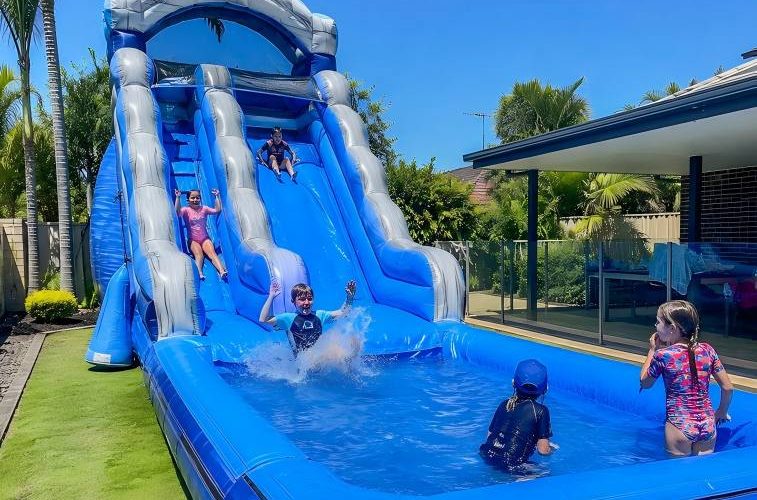
Inflatable water slides are designed for outdoor fun, especially during hot Australian summers. From backyard birthday parties in Sydney to school holiday events in Brisbane, inflatable water slides spend most of their time under direct sunlight.
But many homeowners and rental operators still ask an important question:
Is it actually safe to leave an inflatable water slide in the sun all day?
The short answer is:
Yes — if the inflatable is commercial-grade and used correctly.
However, there are several important factors that affect both safety and the long-term durability of inflatable water slides when exposed to strong sunlight and heat.
Let’s take a closer look.
1. Commercial Inflatable Water Slides Are Built for Outdoor Use
Commercial inflatable water slides are specifically designed for outdoor environments.
High-quality commercial inflatables are normally manufactured using:
- heavy-duty PVC material
- UV-resistant coatings
- reinforced stitching
- commercial-grade blower systems
These materials are designed to handle:
- strong sunlight
- summer temperatures
- repeated inflation
- outdoor events
- water exposure
In Australia, this is especially important because UV levels can become extremely intense during summer months.
A properly manufactured commercial inflatable water slide can safely remain outdoors throughout an entire event day under normal operating conditions.
2. Heat Does Affect Inflatable Pressure
Even though inflatable water slides are designed for sun exposure, heat still affects the internal air pressure.
As temperatures rise during the afternoon, the inflatable material naturally expands slightly.
This is completely normal.
Professional inflatable blowers constantly circulate air through the inflatable, helping maintain stable pressure levels throughout the day.
However, operators should still regularly monitor:
- anchor points
- blower performance
- slide firmness
- surface temperature
- overall stability
This is one reason experienced rental companies perform periodic safety checks during events.
3. Surface Temperatures Can Become Very Hot
One of the biggest concerns during Australian summers is not the inflatable itself — it’s the surface temperature.
Dark-colored PVC materials exposed to direct sunlight can become very warm during extreme heat.
During peak afternoon temperatures, slide surfaces may become uncomfortable for bare skin, especially in areas without continuous water flow.
To reduce heat buildup, many operators:
- keep water flowing continuously
- lightly spray the slide surface
- avoid dry operation during extreme heat
- schedule events earlier in the day
Water significantly helps cool the slide surface and improves overall user comfort.
4. Cheap Residential Inflatables Are More Vulnerable to Sun Damage
Not all inflatable water slides are built to the same standard.
Lower-quality residential inflatables made from lightweight nylon materials are often more vulnerable to:
- UV fading
- seam weakening
- material stretching
- blower strain
- heat damage
This is one reason commercial rental companies usually avoid retail-grade inflatables for frequent outdoor use.
Commercial-grade PVC inflatables are generally much more durable under Australian weather conditions and repeated summer operation.
For businesses running regular summer hires, durability and long-term reliability are often far more important than simply choosing the cheapest inflatable available.
5. Wind Is Usually a Bigger Safety Concern Than Sun
Interestingly, direct sunlight is usually not the biggest safety issue for inflatable water slides.
Wind is often far more dangerous.
Even on sunny days, inflatable water slides should never be operated during:
- strong wind gusts
- storms
- unstable weather conditions
Professional operators should always follow manufacturer wind guidelines and ensure all anchoring systems remain properly secured throughout the event.
In Australia, sudden weather changes can occur quickly during summer afternoons, especially in coastal areas.
6. Can You Leave an Inflatable Water Slide Inflated Overnight?
For short-term events, some operators may leave inflatables inflated overnight under controlled conditions.
However, this is generally not recommended for backyard use unless:
- the inflatable remains fully supervised
- weather conditions are stable
- the blower system remains protected
- all anchoring points are secure
Most professional rental companies prefer to deflate the inflatable after the event to reduce unnecessary weather exposure and prolong equipment lifespan.
7. Tips to Protect an Inflatable Water Slide During Hot Weather
To improve both safety and durability, experienced operators usually follow several basic practices:
Keep Water Flowing
Continuous water flow helps reduce surface temperatures and improves sliding performance.
Avoid Extreme Midday Heat
During severe Australian heatwaves, some operators reduce usage during the hottest part of the afternoon.
Check Anchor Points Regularly
Ground conditions can soften after continuous water exposure, especially on natural grass.
Use Commercial-Grade Equipment
Higher-quality commercial inflatables generally perform much better under long-term sun exposure.
Clean and Dry Properly After Use
Leaving moisture trapped inside the inflatable after a hot day may increase the risk of mould or material wear over time.
Final Thoughts
Yes, inflatable water slides are generally safe to leave in the sun all day — especially commercial-grade models designed for outdoor rental use.
However, proper supervision, correct anchoring, continuous airflow, and regular safety checks remain extremely important during hot Australian summer conditions.
For homeowners and rental operators alike, choosing a high-quality commercial inflatable and following proper operating procedures will make a major difference in both safety and long-term durability.
With the right setup and maintenance, commercial inflatable water slides are built to handle long summer event days across Australia’s demanding outdoor climate.